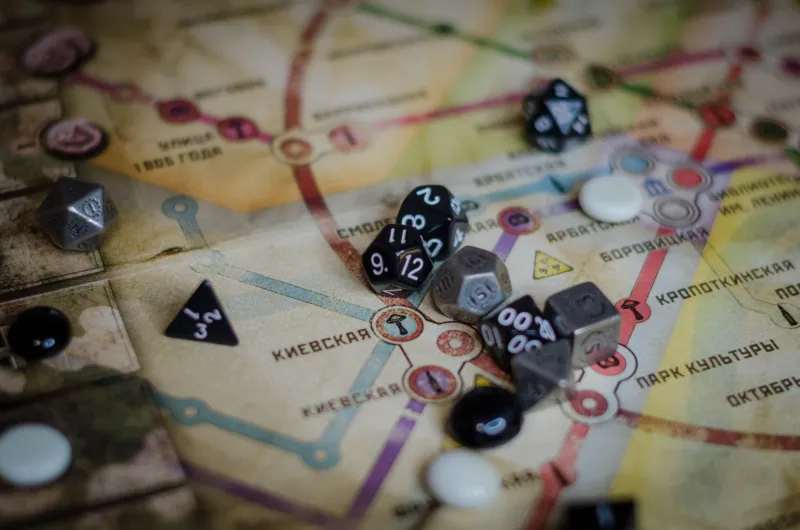
Six Sides of Fortune: Inside the Wild World of Rare Dice Collecting
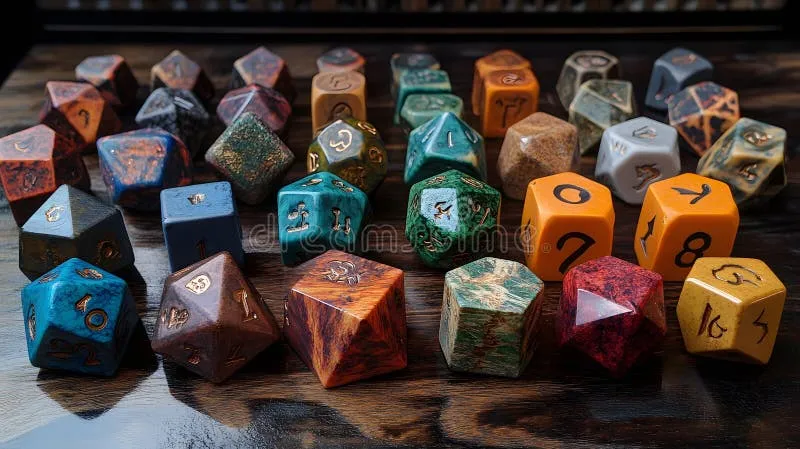
Photo: colorful polyhedral dice collection display rare vintage tabletop, via thumbs.dreamstime.com
Somewhere in a climate-controlled room in Austin, Texas, a man named Derek keeps his most prized possessions in a custom shadowbox mounted on the wall. They're not coins. They're not baseball cards. They're dice — specifically, a complete set of first-edition Gamescience precision polyhedrals from the late 1970s, still in their original packaging, valued at somewhere north of $1,200.
"People think I'm joking when I tell them what these are worth," Derek says, laughing. "Then they look it up."
He's not joking. And he's far from alone.
From Junk Drawer to Treasure Chest
For decades, dice were an afterthought — cheap plastic bits that came bundled with a board game or tossed into a starter set. But somewhere in the last ten years, as tabletop gaming exploded into mainstream culture, dice quietly transformed from functional tools into full-blown collectibles. Today, the secondary market for rare polyhedral sets is a legitimate economy, complete with auction listings, grading debates, dedicated Discord servers, and collectors who track market trends like day traders watching a ticker.
Etsy, eBay, and Facebook Marketplace are the most visible corners of this market, but serious collectors know the real action happens in tighter circles. Private Discord communities, Reddit threads on r/dice and r/DnD, and specialized platforms like Dice Envy's resale boards host transactions that would raise eyebrows at a pawn shop. A single artisan set from a small-batch creator can flip for three to five times its original retail price within months of selling out.
So what makes a set of dice worth $500, $800, or even more? The answer is messier — and more interesting — than you'd expect.
What Collectors Are Actually Chasing
Rarity is the obvious starting point. Limited-edition runs from beloved creators like Norse Foundry, Dispel Dice, and Level Up Dice routinely sell out in minutes, and the aftermarket reflects that scarcity almost immediately. But rarity alone doesn't tell the whole story.
Material matters enormously. Solid metal dice, hand-turned wooden sets, genuine gemstone polyhedrals, and hand-poured resin with embedded inclusions (think real flowers, gold foil, or tiny sculpted figures) command serious premiums. A mass-produced plastic d20 is worth a dollar. A hand-turned set in African blackwood from an independent artisan might fetch $300 — and that's before it sells out and gets relisted.
Historical provenance is another huge driver. Early Dungeons & Dragons supplemental materials included dice that are now considered artifacts of tabletop history. Collectors hunting for original TSR-era sets, early Lou Zocchi designs, or prototype dice from canceled Kickstarters are essentially chasing gaming archaeology. One collector on Reddit documented finding an unopened set of Zocchi dice at an estate sale for $4 — and reselling them for $340.
"It's the same psychology as vintage sneaker collecting or rare vinyl," says Monica, a reseller based in Chicago who estimates she moves around $15,000 worth of dice inventory per year. "People want the thing they couldn't have, or the thing that connects them to a specific moment in gaming history. Dice just happen to be small enough that you can own a lot of them."
The Artisan Effect
Perhaps the biggest fuel on this fire is the rise of independent dice makers — small-batch craftspeople who treat dice as art objects rather than game components. Creators who build followings on Instagram and TikTok can generate genuine hype around a new pour, driving pre-orders that sell out in hours and aftermarket prices that immediately double.
The best of these artisans have developed signature styles as recognizable as any fine artist's work. Certain color combinations, inclusion types, or casting techniques become associated with a specific maker, and collectors learn to identify them on sight. A "galaxy pour" from one well-known creator looks completely different from another's, even if both use similar pigments. That distinctiveness is exactly what the market rewards.
Kickstarter has been a massive accelerant here. Campaigns for premium dice sets regularly hit their funding goals in under an hour, with stretch goals unlocking increasingly elaborate variants. The limited-edition exclusives from these campaigns — backer-only colors, prototype versions, signed sets — are often the most aggressively traded items in the secondary market.
Is It an Investment?
Here's where things get a little complicated. Some collectors are genuinely in it for the love of the hobby. Others are watching their collections appreciate and thinking about ROI. Both groups coexist, but they don't always see eye to eye.
"I've watched people buy sets specifically to flip them," says Derek. "And honestly, some of them have done really well. But the moment you're buying dice you don't actually want to roll, something feels off."
That tension is real. Scalpers who buy out limited drops purely to resell at markup are a genuine point of frustration in the community, and some creators have started implementing lottery systems or waitlists to prevent it. But the line between savvy collector and opportunistic reseller is blurry, and not everyone agrees where it falls.
What's less debatable is the financial reality: certain dice sets have genuinely outperformed more traditional collectibles over the past five years. A complete set of early Chessex Speckled dice in discontinued colorways, for example, has quietly become worth real money to the right buyer. The market is illiquid and niche, but it's real.
Rolling Into the Future
The dice collecting market shows no signs of cooling down. If anything, the continued growth of actual play content — livestreamed D&D campaigns, actual play podcasts, and tabletop gaming on YouTube — keeps introducing new players to the hobby, and new players eventually become collectors.
For now, if you've got a shoebox full of old dice gathering dust in a closet, it might be worth doing a little research before you toss them. You could be sitting on something more valuable than you think. And if you're already deep in the hobby, well — you probably already know exactly what that box is worth.
The dice economy is open for business. Roll for appraisal.