Six Sides, Infinite Possibilities: How the Humble d6 Is Quietly Stealing the Spotlight Back
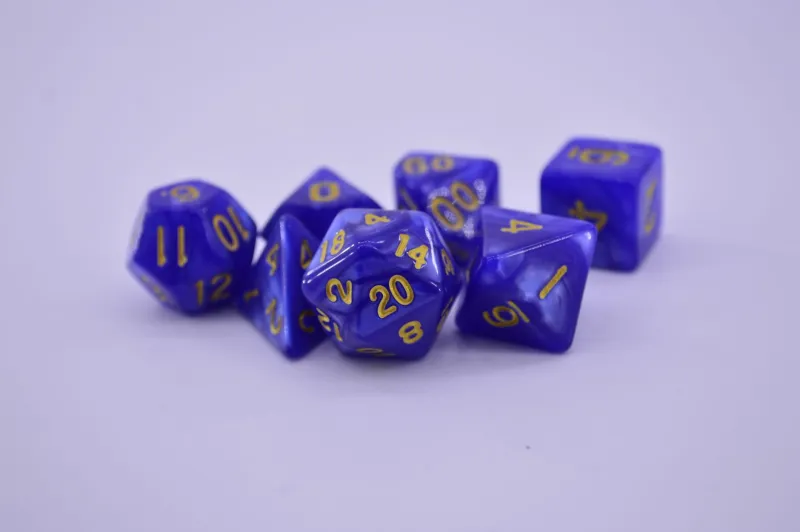
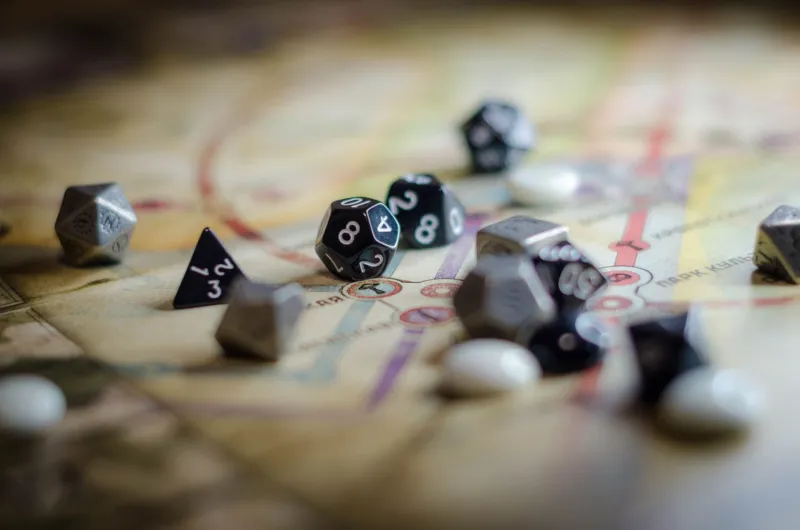
Walk into any game store in America right now and you'll be immediately confronted by the full rainbow of polyhedral glory. Glittery d20s. Hand-poured resin d12s that look like trapped galaxies. Chunky d10s in every color imaginable. The modern dice market is a maximalist fever dream, and honestly? We love it.
But spend enough time in tabletop circles — real deep-cut, convention-attending, home-brew-writing circles — and you start hearing a different conversation. A quieter one. It goes something like: what if we've been sleeping on the d6 this whole time?
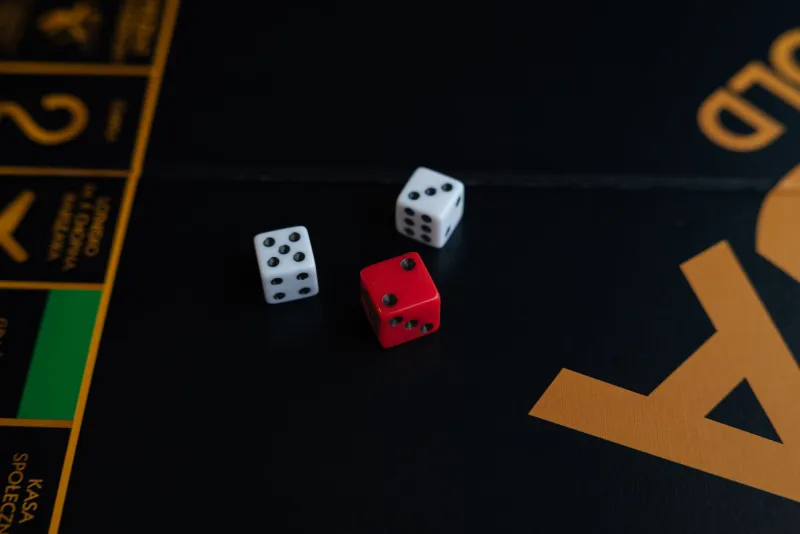
Because while the hobby has spent the last decade celebrating polyhedral complexity, a surprisingly passionate contingent of designers and players has been circling back to the most basic die in the bag. The cube. The one your grandma probably has rattling around in a Yahtzee box somewhere. And they're doing genuinely interesting things with it.
The Cube Was Never Actually Basic
Here's the thing about the d6 that gets lost in all the hype around fancier shapes: it has an incredibly rich mechanical history. Before D&D made the d20 the cultural shorthand for tabletop gaming, six-sided dice were already embedded in centuries of play culture — from ancient board games to craps tables in Las Vegas. Wargaming, the direct ancestor of modern tabletop RPGs, leaned heavily on d6 systems. Games like Traveller and early editions of GURPS built entire universes of possibility out of six-sided pools.
The d6 never disappeared. It just got overshadowed.
And now, with a new generation of designers actively pushing back against what some call "polyhedral creep" — the tendency to reach for more exotic dice as a shorthand for mechanical sophistication — the cube is getting a second look.
Why Designers Are Coming Back Around
Talk to enough indie game designers and a pattern emerges. Many of them started with big, sprawling systems that used every die type imaginable, then gradually stripped things back as they got more experienced. The d6, it turns out, has some genuinely compelling design advantages.
First, there's accessibility. Almost every American household has a d6 somewhere. Board games, travel games, old casino sets — six-sided dice are everywhere. A tabletop RPG or dice game that runs entirely on d6s removes a barrier that newer players might not even realize exists. You don't need to explain what a d12 is. You don't need to send someone to a specialty store.
Second, and more interesting from a pure design standpoint, is the math. The probability curve of a single d6 is completely flat — every result from one to six is equally likely. But pool multiple d6s together and something elegant happens: the results start clustering toward the middle, creating a natural bell curve. This gives designers a ton of control. Want outcomes that feel dramatic and swingy? Use one die. Want results that feel earned and consistent? Use a pool. The same physical object produces wildly different statistical behavior depending on how you deploy it.
"There's this assumption that more die types equals more design sophistication," one indie designer explained at a recent convention panel. "But honestly, working within constraints forces you to be more creative. The d6 is a puzzle I keep coming back to."
The Games Making the Argument
You don't have to take anyone's word for it. Just look at what's actually landing with players right now.
Blades in the Dark, one of the most influential tabletop RPGs of the last decade, runs entirely on d6 pools. Its dice mechanics feel tense and meaningful despite — or maybe because of — their simplicity. The game strips away the sprawling stat modifiers of traditional RPGs and replaces them with a clean, readable system where the number of dice you roll tells the whole story.
Over in the board game world, dice-building games have exploded as a genre, and many of the best ones lean on d6s as their primary engine. The satisfying click of a full fist of six-siders hitting the table is, for a lot of players, the platonic ideal of what rolling dice should feel like.
Even in the wargaming space, which never really abandoned the d6 to begin with, there's been a renewed appreciation for what clean, cube-based systems can do. Games that might have chased complexity a decade ago are now earning praise specifically for how elegantly they handle outcomes with just a handful of standard dice.
The Veteran Player Effect
There's also a generational dimension to this conversation worth acknowledging. A lot of the loudest voices championing the d6 renaissance are players who've been in the hobby for twenty or thirty years. People who've played through every edition of every major system, accumulated dice bags the size of small pillows, and come out the other side with a kind of hard-won minimalism.
For these players, choosing a d6-based game isn't a concession to simplicity — it's a deliberate aesthetic preference. It's the tabletop equivalent of a musician who can play anything choosing to perform on a stripped-down acoustic guitar. The constraint is the point.
"I still love my fancy dice," admitted one veteran player in an online forum discussion that spiraled into hundreds of replies. "But there's something that just hits different about a game that trusts six sides to carry the whole mechanical weight. It feels confident."
Does This Signal Something Bigger?
It's tempting to read the d6 revival as a symptom of broader trends in game design — a pendulum swinging back toward clarity after a long stretch of complexity. And there might be something to that. The games getting the most critical attention right now tend to prize elegance over comprehensiveness. Rules that fit on an index card. Systems that new players can grasp in under ten minutes.
The d6, in that context, becomes almost a philosophical statement. It says: we don't need to impress you with our dice. We're going to impress you with what we built around them.
That's not a knock on polyhedral culture — d20s and their exotic cousins aren't going anywhere, and they shouldn't. The variety of dice available to modern players is genuinely one of the hobby's great joys. But the fact that the humble cube is generating this much creative energy right now says something interesting about where game design is headed.
Six sides. Infinite room to grow.
Maybe your grandma's Yahtzee dice were ahead of their time all along.