One Roll to Rule Them All: The Legendary Dice Moments That Defined Entire Campaigns

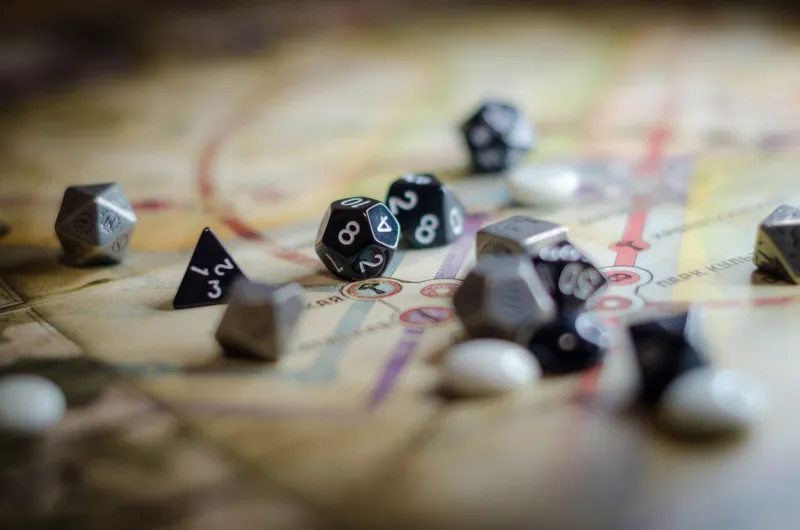
There's a particular kind of silence that falls over a table right after the dice land. Not the polite pause between turns, but the breathless, suspended kind — where everyone leans in and nobody breathes, and the number staring back at you from the felt mat could either unravel three months of careful storytelling or launch something nobody saw coming.
Those are the moments tabletop players live for. And some of them? They never stop talking about them.
The Anatomy of a Legendary Roll
Not every critical hit becomes legend. Plenty of natural 20s get forgotten by the following weekend. What separates a memorable roll from a genuinely mythic one has less to do with the number itself and more to do with the stakes surrounding it.
Jamie Reyes, a game master out of Austin, Texas, who has been running campaigns since the mid-2000s, puts it simply: "The dice don't care about drama. We do. A legendary roll is legendary because of everything that led up to it — the buildup, the relationships, the impossible odds. The dice just close the chapter."
Jamie's own legendary moment came during a nearly two-year-long homebrew campaign. The party's rogue, played by a player named Marcus, had been secretly feeding information to the campaign's main villain for months — a slow-burn betrayal that Jamie had been weaving into the narrative since session four. When the truth finally surfaced in a tense confrontation scene, Marcus decided, on a whim, to roll Persuasion to convince the rest of the party he'd had no choice.
He rolled a natural 1.
"The table erupted," Jamie recalls. "Not in anger — in this kind of horrified, delighted laughter. Marcus just put his head down on the table. The paladin's player immediately announced that her character drew her sword. It fractured the party completely and launched an entirely new arc we hadn't planned at all. We still talk about it at every reunion game."
When the Dice Break the Story Open
Some of the most celebrated rolls in tabletop history didn't happen in published adventure modules or organized play tournaments. They happened in someone's living room in Ohio, or around a folding table in a Phoenix garage, or on a video call where someone screen-shared their dice tray.
What they share is a quality of irreversibility. The dice landed, the moment crystallized, and suddenly the campaign was something it had never been before.
Sarah Okonkwo, a veteran player and occasional dungeon master from Chicago, describes a moment during a Pathfinder campaign that her group still references as "the night the dice chose chaos." Her group's wizard attempted to cast a powerful spell to seal a dimensional rift — a Hail Mary play with catastrophic failure conditions baked into the rules. The odds were genuinely bad. Everyone at the table knew it.
"She rolled a 2," Sarah says, still sounding slightly awed years later. "And the GM had this rule that catastrophic failures on dimensional magic had to be rolled on a random effects table. We ended up pulling an effect that basically rerouted the entire campaign to a different plane of existence. We were supposed to be finishing the main arc that night. Instead, we played another eight months."
The group kept the dice. They're in a little velvet bag labeled, in permanent marker: The Ones That Did This.
The Roll That Changed a Relationship
Not every legendary moment is about plot. Sometimes the dice do something more intimate — they reveal something about the people sitting around the table.
Derek Huang, who runs a weekly D&D 5e game out of Seattle, describes a session where two players — a married couple — were roleplaying characters on opposite sides of a moral conflict. The tension had been building for weeks, both in-game and, by Derek's account, "definitely a little bit at home too."
The husband's character challenged the wife's character to a duel of honor. A symbolic one, meant to resolve an in-game ideological standoff. They rolled opposed checks. The wife won decisively — a 19 against a 4.
"She stood up, pointed at him across the table, and said, 'In this house AND in the Forgotten Realms,'" Derek laughs. "Everyone lost it. Whatever tension had been building just evaporated. The game basically stopped for twenty minutes because we were all laughing too hard. They still bring it up at the holidays."
This is the part of tabletop gaming that's genuinely hard to explain to outsiders. The dice aren't just resolving mechanical outcomes. They're creating shared emotional experiences that bond people in surprisingly durable ways.
What Makes a Moment Stick
Gaming historian and prolific actual-play podcast host Renata Solano has spent years thinking about why certain dice moments become permanent parts of a group's mythology while others fade.
"It's almost always about vulnerability," she says. "The best dice moments happen when someone took a real risk — mechanically, narratively, emotionally — and the dice responded dramatically. Either they rewarded the courage spectacularly or punished it in a way that was somehow perfect for the story. Either way, the player was exposed, and the table witnessed it together."
Solano points to the broader actual-play streaming world as proof of concept. The moments that clip and go viral from shows like Critical Role or Dimension 20 are rarely the strategically optimal plays. They're the desperate long shots, the emotionally loaded character decisions, the moments where a player threw caution aside and let the dice decide something that mattered.
"The dice are this beautiful randomizer that nobody controls," she adds. "And when something genuinely surprising happens because of them, it feels like the universe participated in your story. That's a pretty powerful feeling."
Your Legendary Roll Is Waiting
Here's the thing about legendary dice moments: you can't engineer them. You can't stack the deck toward them or plan for them in your session notes. They arrive sideways, usually at the worst possible time, in the middle of something you thought was going to go completely differently.
That's the whole point.
Every person you'll ever meet who's spent serious time at a tabletop has at least one story that starts with, "So we were in the middle of this campaign, and nobody expected what happened next." The dice did something wild. The table went silent. And then everything changed.
If you haven't had yours yet, keep rolling. It's coming.
And when it does, write it down — because twenty years from now, you're going to want to remember exactly how it felt when the dice saved the game, or broke it, or turned it into something none of you ever could have imagined on your own.